Skip to content




Ask ten people how they’re feeling and you’ll get ten different answers. Ask the same ten people to name a complicated emotion — the bittersweet one when an old friend gets engaged, or the small twist of envy at a colleague’s good news — and you’ll watch most of them reach for a word that doesn’t quite fit.
It turns out scientists have the same problem. For about a hundred and fifty years now, researchers have been trying to count human emotions, and they still don’t agree. Six? Eight? Twenty-seven? Infinite? Each number has a serious researcher behind it. None of them are obviously wrong.
The disagreement isn’t a failure. It’s a window into how strange and layered the inner life of a human actually is. And understanding how the science evolved is genuinely useful — not just academically, but for the very real work of knowing what you’re feeling.
How Many Emotions Are There
There’s no single answer, and that’s the honest place to start. Different researchers using different methods have produced different counts. A few of the major models stacked next to each other:
| Researcher | Count | The basic emotions they named | What this model emphasizes |
| Paul Ekman (1970s) | 6 | Happiness, sadness, anger, fear, surprise, disgust | Facial expressions seen across cultures |
| Robert Plutchik (1980) | 8 | Joy, sadness, anger, fear, trust, disgust, surprise, anticipation | Emotions arranged in a color-wheel pattern |
| Carroll Izard | 10 | Includes shame, guilt, contempt, interest | Discrete emotions with separate neural systems |
| Cowen & Keltner (2017) | 27 | Categories like awe, awkwardness, nostalgia, relief | Modern data-driven mapping of subjective experience |
| Lisa Feldman Barrett | Effectively infinite | Emotions are constructed in the moment | There are no fixed categories — context creates them |
Each of these counts is defensible. Each rests on a different definition of what counts as a separate emotion versus a variation on a more basic one.
The Basic Emotions Framework
The argument behind the framework:
- These emotions show up on the face in similar ways across cultures
- They’re visible in young infants long before language develops
- Each has a distinct physiological signature — heart rate, skin conductance, breathing
- Each evolved to handle a specific kind of survival situation
Later researchers expanded the list. Ekman himself added more in his later work, including contempt, embarrassment, and pride. But the basic-emotions framework remained the model most psychology textbooks built around for decades.
The Role of Facial Recognition in Emotion Research
Facial expressions became the dominant tool for studying emotion in the late 20th century. Ekman’s Facial Action Coding System (FACS) maps every visible muscle movement in the face and assigns it a number. Researchers can analyze even tiny microexpressions — flashes of feeling that last a fraction of a second.
But faces have limits as a research tool. People hide their feelings. Different cultures have different rules about what’s acceptable to show. And some emotions — like shame, longing, or quiet contentment — don’t have a clean facial signature at all. Which is part of why newer research has moved beyond faces.
Primary Emotions and Their Functions
Primary emotions, in most models, refer to the foundational feelings everything else builds from. Common across most frameworks:
- Happiness — signals safety, connection, things going well
- Sadness — registers loss, draws others in for support
- Anger — responds to threats, boundaries crossed, injustice
- Fear — scans for danger, prepares the body to react
- Surprise — interrupts attention, makes you notice the new thing
- Disgust — protects from contamination, both physical and moral
Each of these is doing a job. They evolved because they made survival more likely. The more complex emotions — guilt, pride, jealousy, nostalgia — are often described as combinations or extensions of these primary feeling categories.
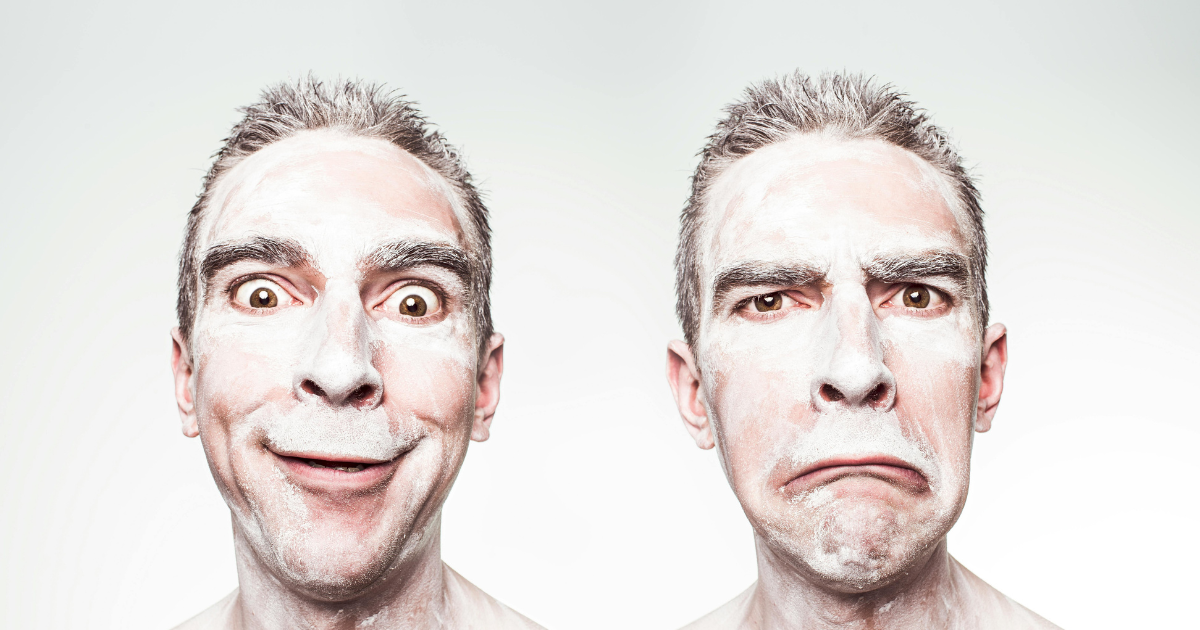
Emotion Classification Systems Throughout History
People have been trying to categorize emotion types for as long as people have been writing things down. A quick tour:
- Aristotle named fourteen emotions and tied them to character
- Descartes settled on six primary passions in the 1600s
- Darwin wrote a whole book in 1872 arguing that emotions evolved alongside the body
Every era brought a new lens, and every new lens added something. None of them produced a final answer.
From Darwin to Modern Neuroscience
Darwin’s argument was that emotions had survival value — fear kept ancestors alive, anger helped them defend territory, disgust kept them from eating something that would kill them. This evolutionary framing influenced everyone who came after. Modern neuroscience has refined the picture by adding the wiring. We can now see which brain regions are active during fear (the amygdala does most of the early work), happiness (dopamine pathways light up), and sadness (anterior cingulate involvement). The story Darwin started telling 150 years ago is the same story, told now with imaging machines.
Emotional Psychology and the Brain’s Response
Emotions aren’t mystical. They’re produced by real biological machinery — neurotransmitters, brain regions, hormones, and the rapid communication between them.
The National Library of Medicine’s MedlinePlus recognizes that emotional well-being depends on the balanced functioning of these systems, and that disruptions in emotional regulation are core features of most mental health conditions.
How Neurotransmitters Shape Our Feelings
Different chemicals get associated with different emotional states:
- Dopamine — tied to motivation, reward, the feeling of looking forward to something
- Serotonin — linked to stable mood, contentment, social bonding
- Norepinephrine — involved in alertness, arousal, the body’s response to stress
- Oxytocin — released during connection, trust, physical closeness
- Cortisol — the stress hormone — useful in short bursts, damaging when chronic
The Limbic System’s Role in Emotional Processing
The limbic system is the brain’s emotional headquarters. A few of its key players:
- The amygdala — fast, reactive, handles fear and threat detection
- The hippocampus — ties feelings to memory and context
- The hypothalamus — runs the body’s physiological response to emotion
- The anterior cingulate — helps regulate and reflect on what you’re feeling
Emotional States and Their Variations
One of the things that complicates emotion counting is that emotional states are rarely pure. In real life, you’re almost always feeling more than one thing at once:
- Excited about a new job and grieving the old one in the same week
- Furious at a friend and still loving them
- Proud of a child and quietly sad they’re growing up
- Relieved that a difficult relationship ended, and missing it
This is part of why newer researchers like Lisa Feldman Barrett have argued that emotions aren’t fixed categories at all. They’re constructed in the moment, from the available ingredients — body sensations, context, memory, and language. By her account, the question “how many emotions are there” is a little like asking how many recipes there are. Technically infinite, depending on how you slice it.
Getting Professional Support at Mental Health Center of San Diego
Whether you’re trying to understand your own emotional life, or struggling with feelings that have gotten harder to manage, this is the kind of work that goes deeper alongside someone trained. Therapists don’t just help you name what you’re feeling — they help you understand what those feelings are telling you, and what to do with them.
Mental Health Center of San Diego offers clinical support for anxiety, depression, mood disorders, and the emotional patterns that show up over and over again in real life. Reach out today to start working with a therapist who can help you build a more honest relationship with your own emotional experience.
FAQs
-
Can neurotransmitters trigger different emotional states or just intensify existing feelings?
Both. Neurotransmitters can shift the baseline mood you’re operating from, and they can amplify or dampen specific feelings as they happen. The same chemical can produce different emotional experiences depending on context, which is why two people on the same medication can feel quite different things.
-
Do all human emotions share the same facial expressions across different cultures worldwide?
Ekman’s research suggests that a small set of basic emotions — happiness, sadness, anger, fear, surprise, disgust — show up on faces similarly across cultures. More complex emotions like nostalgia, pride, or contempt show much wider cultural variation in how they’re expressed and recognized. Universality is real but limited.
-
How do primary emotions differ from secondary emotions in the limbic system’s processing?
Primary emotions — fear, anger, sadness, joy — tend to fire fast through the amygdala and lower brain regions. Secondary emotions like guilt, shame, or jealousy involve more cortical input, since they require self-reflection and social context. The processing isn’t fully separate, but the timing and the brain real estate involved differ in measurable ways.
-
Why do emotion classification systems vary between psychology researchers and neuroscience studies?
Because they’re asking different questions. Psychology often defines emotions by behavior and subjective experience, while neuroscience defines them by brain activity and physiological response. These two lenses sometimes converge — and sometimes don’t — which is part of why the field still hasn’t produced a unified count.
-
Which emotional psychology theories best explain why people feel multiple emotions simultaneously?
Dimensional theories — like the circumplex model — and constructionist theories from researchers like Lisa Feldman Barrett do the best job of explaining mixed emotional states. They argue feelings are blends along multiple axes rather than discrete on-off switches. That framing fits real human experience much more closely than rigid category-based models.