Skip to content




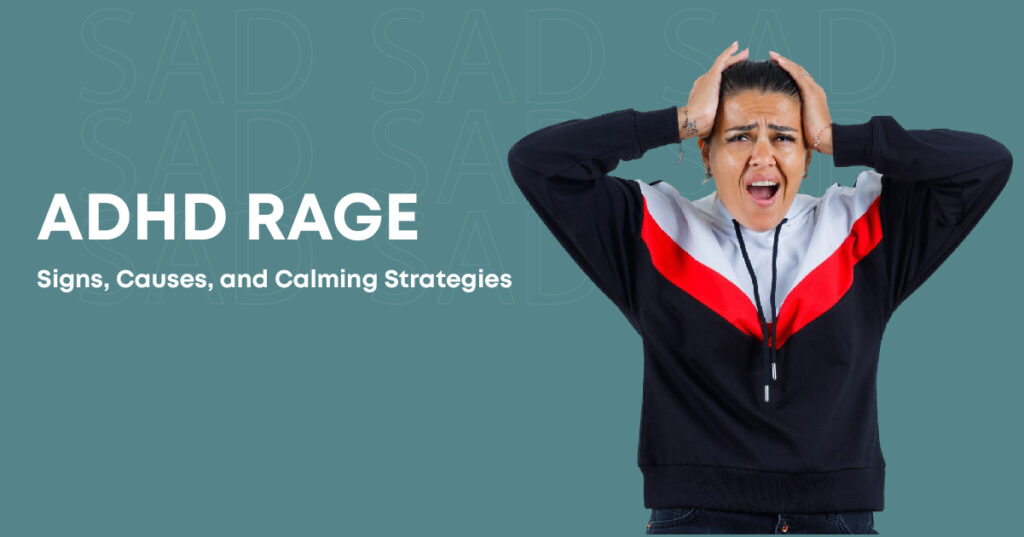
ADHD can be well explained in terms of focus, restlessness, or impulsivity, however, in most cases, one of the most difficult symptoms of the disorder is ADHD rage. These unexpected and extreme emotional responses are explosive and overwhelming, leaving people and their loved ones wondering what exactly transpired and why.
Anger associated with ADHD is not a character defect, and neither is it malicious. It has its foundation on emotional regulation disruption, neurobiology, and how the ADHD brain processes stimulation, stress, and rejection. Learning about the symptoms, reasons, and relaxation techniques can help people re-establish balance, strengthen relationships, and minimize the severity of emotional storms.
Understanding ADHD Rage and Emotional Dysregulation
ADHD rage is the violent anger that may suddenly develop when the brain becomes overloaded. Emotional dysregulation – which is a fundamental yet not much considered aspect of ADHD – renders it difficult to stop, process, and react to things calmly.
Recognizing the Link Between ADHD and Intense Emotional Reactions
ADHD patients tend to have stronger and slower emotions. The alarm systems in the brain may be activated by stress, oversensory input, frustration, or an unforeseen event.
The most significant emotional responses that are indicators of rage in ADHD can be developing, such as:
- Being overcome at once or suddenly snapping.
- Very strong irritability or frustration at minor provocation.
- Feeling like you are drowning because of your feelings.
- Inability to relax after anger has set in.
Common Triggers of ADHD Rage
ADHD rage is rarely random. It is usually associated with certain emotional, environmental, or neurological factors that cause the brain to respond to a fight-or-flight reaction. Each of the teens, children, and adults can react to these triggers in different ways, yet the processes are alike.
A significant number of triggers are related to the problems with executive functioning – planning, prioritizing, emotional processing, or attention switching. In situations when expectations are too high or too abrupt, the brain responds in a defensive manner.
How Irritability, Impulsivity, and Rejection Sensitive Dysphoria Contribute
The gap between being overwhelmed and being outward is reduced by irritability and impulsivity. Rejection Sensitive Dysphoria (RSD) incorporates an emotional hurt that may intensify anger.
Popular internal factors of ADHD rage are:
- Overstimulation, fatigue, or frustration will lead to irritability.
- Impulsivity lowers the capacity to wait before responding.
- RSD, in which one experiences emotional pain when feeling criticized or rejected.
- Reactive mood swings that are caused by stress, sensory overload, or change.
How ADHD Brain Differences Fuel Mood Swings and Anger
The basis of ADHD lies within the neurological dissimilarities, particularly in areas that handle mood, concentration, and executive functions. Such variations complicate the process of controlling the emotional reactions, causing rapid mood changes or violent outbursts.
The Role of Neurotransmitters and Executive Function Challenges
The conditions of neurotransmitter imbalance and executive functioning define the ADHD responses of persons to stimulating events. Reactions may become sudden and uncontrollable when regions of the emotional system are activated faster than those of the reasoning system.

Brain-based factors contributing to the ADHD rage are:
- Lower dopamine affects feelings, control, and reward handling.
- Less powerful executive functioning to impose restraint in stressful situations.
- Hyperactive threat reactions result in faster arousal to anger.
- The problem in changing focus causes emotional recuperation to be slower.
Immediate Calming Strategies for ADHD Rage Episodes
ADHD rage is not about holding the emotion back when it breaks out – it is just finding adequate space where the brain can reset. The use of fast-acting strategies can help stop the emotional swell before it overwhelms.
Bodily tools may be particularly grounding because emotional regulation keeps channeling back to physical regulation.
The following effective methods can be used to bring about calmness of ADHD rage in the instant:
- Leaving the trigger in order to alleviate overstimulation immediately.
- Applying breathing exercises such as box breathing or deep exhaling.
- The use of sensory grounding techniques, including touching something cold.
- Doing a brief physical reset: stretching, strolling, or releasing tension.
Long-Term Coping Strategies and Skills for Managing Anger
ADHD anger management needs to be a daily behavior, a skill development process, and proactive. The long-term plans enhance emotional stability, frustration, and frequency of rage attacks.
The therapeutic support is persuasive, and it provides people with methods for understanding their emotional patterns.
Long-term plans for controlling the anger of ADHD involve:
- Frequent mindfulness training to develop emotional intelligence.
- Catastrophic thinking challenge methods, which are based on CBT.
- Skills that have been inspired by DBT, like distress tolerance and emotional grounding.
The Impact of ADHD Rage on Relationships, Work, and Daily Life
ADHD temper tantrums are not confined to internal feelings and emotions, but have an influence on relationships, communication, schoolwork, and career stability. Family members might misinterpret the anger and assume that it is deliberate and directed at them. In the long run, this will generate distraction, embarrassment, and emotional fatigue.
However, these trends can be changed with the proper tools and encouragement, and people will be able to restore their trust and be able to talk in a more relaxed manner.
Some of the examples of how ADHD rage impacts normal life include:
- Heightened discord in any relationship or miscommunication among peers.
- Problem controlling anger at school or in the workplace.
- Conscious following outbursts or emotional storms.
- Fear of reacting to a certain environment, avoidance.
Find Support and Treatment Options at Mental Health Center of San Diego
ADHD rage may be very difficult to manage without evidence-based, personalized care. Mental Health Center of San Diego offers professional-level assistance aimed at stabilizing emotions, teaching coping strategies, and enabling long-term resilience.
Mental Health Center of San Diego works towards raising awareness of symptoms, developing long-term coping mechanisms, and fostering healthier emotional responses. Get help today, in case you or a loved one is having trouble managing anger because of ADHD.
FAQs
What are common signs of emotional dysregulation and anger outbursts in ADHD?
These are reflected in having sudden irritation, emotional overwhelm, acting impulsively, and being unable to soothe oneself after getting irritated. These tantrums would seem more severe and quick-tempered than normal anger.
How do impulsivity and rejection-sensitive dysphoria contribute to ADHD rage?
Impulsivity makes the delay between the stimulus of feeling and the response short, whereas RSD intensifies emotional distress in case of perceived rejection. The combination of the two contributes to an increasing and more difficult anger response.
What role do brain differences in ADHD play in mood swings and intense anger?
The variations in dopamine levels, executive functioning, and emotion processing can complicate the process of controlling reactions. These neuronal aspects create quick mood fluctuation and anger reactions.
What immediate anger management techniques can help during ADHD rage?
Moving out of the situation, breathing, grounding exercises, and physical exercise will instantly halt emotional intensity. These techniques relax the nervous system and allow one to think more clearly.
How do coping strategies and support systems aid in managing ADHD-related irritability?
Mindfulness, cognitive restructuring, routine building, and therapy are long-term plans to lessen the intensity of emotions. Positive relationships bring in stability and assist in strengthening healthier emotional patterns.