Skip to content




Introduction to Anxiety and Nervousness
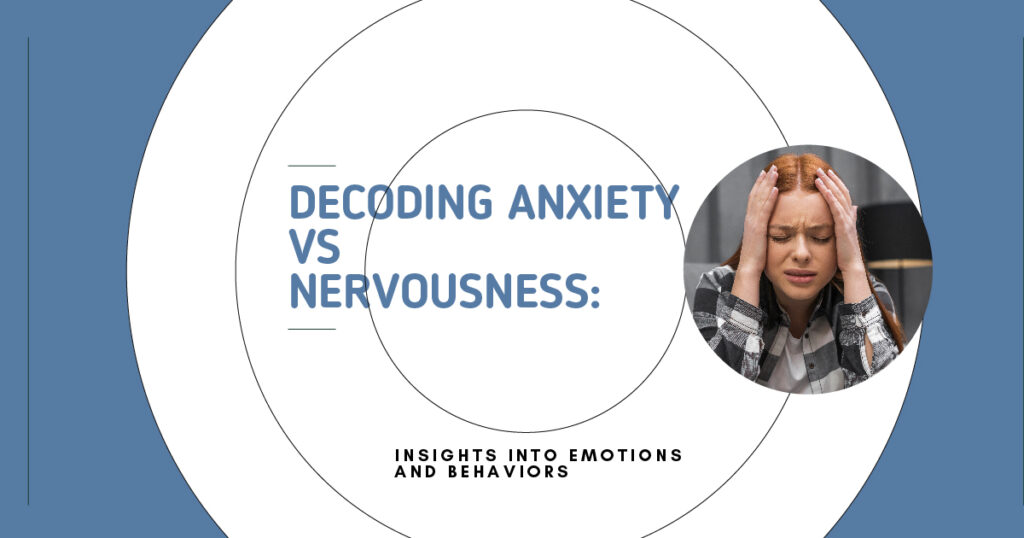
Being mindful of the difference between being anxious vs. nervous may be a problem because in everyday life these two emotional conditions tend to get mixed up. The difference between the two terms is often made by most people, yet mental health professionals have found that these forms have some significant differences that can influence the treatment plan and self-management. These two experiences fall within the range of emotions of human beings, though the question of when a normal nervous experience shifted to anxiety is significant to the definition of psychological health.
The National Institute of Mental Health (NIMH) states that approximately 31% of adult Americans experience anxiety disorders at least once in their lives; that is why one should get to know more about these emotional experiences. This article contrasts the states of anxiety vs. nervousness, and you will be able to know the symptoms of the problem, where the problem originates, and how to cope with it to achieve success.
Defining Anxiety vs Nervousness
“Anxious” and “nervous” definitions illustrate different emotional experiences amid the fact that the two appear similar on the surface. Nervousness is generally a natural reaction to a certain scenario, including a job interview, first date, or speaking engagement in public. This nervous emotion is likely to fade away as soon as the causal agent is gone, and people can resume their original emotional state rather fast.

On the contrary, anxiety can be endless and even persistent even in the absence of a particular stimulus and interferes with normal life. The nervous emotions are not always anticipated and can be overwhelming so that it seems that there is a cycle of worry that is difficult to get out of. This is the major difference between anxiety and nervousness that has to be recognized as the first step to adequate self-evaluation and help-seeking.
Key Differences Between Anxiety and Nervousness
| Characteristic | Nervousness | Anxiety |
| Duration | Short-term; resolves after event | Persistent; may last weeks or months |
| Trigger | Specific, identifiable situation | Often vague or unknown |
| Intensity | Proportional to situation | Often disproportionate to circumstances |
| Impact on Function | Minimal daily disruption | Significant interference with life |
| Physical Symptoms | Mild; butterflies, sweaty palms | Severe panic attacks, insomnia |
Symptoms of Anxiety and Nervousness Understanding Anxious Symptoms
Anxious symptoms are exhibited physically as well as psychologically, which produces an overall stress reaction in the body. People with anxiety have frequent reports of constant worry that they cannot easily get rid of despite their understanding that their concerns can be too extreme. Anxious feelings may give rise to the feeling of an imminent doom or ongoing anxiety that gives the ordinary experience some aspects of anxiety.
Common anxious symptoms include:
- Racing thoughts and difficulty concentrating on tasks
- Muscle tension, particularly in the neck, shoulders, and jaw
- Sleep disturbances, including insomnia or restless sleep
- Irritability and mood fluctuations
- Avoidance behaviors that limit daily activities
Exploring Nervous Feelings
A nervous feeling is generally a feeling of anticipation towards a particular event and is characterized by familiar physical feelings. This nervousness has an adaptive role, unlike the chronic anxiety, which trains the body to work under pressure. Many individuals even discover that moderate nervousness makes them work better by making them more alert and focused.
Typical signs of a nervous feeling include:
- Butterflies or fluttering sensations in the stomach
- Sweaty palms or slight trembling
- Increased heart rate that normalizes after the event
- Temporary difficulty finding the right words
- Restlessness or fidgeting before the anticipated situation
Anxiety Disorders and Their Impact
When anxiety is established as chronic, overwhelming, and disruptive to normal functioning, then it is possible to have an anxiety disorder. Such circumstances are a serious exaggeration of the usual nervousness and are to be treated by a professional. The American Psychological Association (APA) identifies a variety of anxiety disorders that have different symptoms but are united by a common factor: excessive fear or worry that is often long-term.
Generalized anxiety disorder is characterized by constant concern regarding most events in life, whereas panic disorder is characterized by sudden and high-intensity fear. Social anxiety disorder revolves around worries of being judged during a social situation, and specific phobias are a great deal of fear of specific things or events. All of them might have serious consequences on quality of life, relations, and career when treated poorly.
Analyzing Nervous Behavior
Nervous behavior is displayed differently by different people and circumstances. Some are full of an external behavior, such as fidgeting, pacing, or excessive talkativeness, and others are full of nervousness within their bodies, but they look composed. The knowledge of the display of nervous behavior may make an individual observe their pattern and practice the appropriate coping strategy.
In a person’s social life, nervous behavior can be refusing to look at the face of the other party, speaking in a rush, or having little ability to converse with another. These behaviors tend to be situational, and the more people are relaxed, the less these behaviors occur. Recognition of these patterns makes people act in certain ways when responding to their nervous responses.
Emotions Associated with Anxiety
Fearful feelings go beyond mere worry to include a paradigm of reactions, which may involve all spheres of life. Dread, helplessness, and frustration are what people who report having experienced anxiety normally mention as their main concern. These anxious feelings may give rise to secondary issues about the anxiety, and this circles back to strengthen the initial distress.
The mental strain of anxiety can comprise shame in relation to reactions, guilt in relation to perceived inabilities, and sadness regarding lost chances. There is a need to realize that these feelings are not unique experiences of individuals, but they are also shared by millions of people and can bring some relief and encourage seeking help.
Strategies for Dealing with Nervousness
The strategies of coping with nervousness and anxious emotions depend on the severity and character of the experience. Although the occasional nervousness is usually cured by self-help methods, a constant state of anxiety can be treated by a professional. The table below reflects the strategies that should be used in various scenarios.
| Strategy Type | Description and Application |
| Deep Breathing Exercises | Practice 4-7-8 breathing: inhale for 4 counts, hold for 7, exhale for 8. This activates the parasympathetic nervous system, reducing immediate stress responses. |
| Grounding Techniques | Use the 5-4-3-2-1 method: identify 5 things you see, 4 you hear, 3 you touch, 2 you smell, and 1 you taste. This anchors awareness in the present moment. |
| Cognitive Restructuring | Challenge negative thought patterns by examining evidence for and against worried predictions. Replace catastrophic thinking with balanced perspectives. |
| Physical Exercise | Regular aerobic activity releases endorphins and reduces cortisol levels. Even a 20-minute walk can significantly decrease nervous tension. |
| Professional Therapy | Cognitive-behavioral therapy (CBT) and other evidence-based approaches help identify triggers, develop coping skills, and address underlying causes of chronic anxiety. |
Finding Your Center: San Diego’s Path to Emotional Wellness
The knowledge of the difference between anxious and nervous states will enable people to make decisions regarding mental health care. Although some nervousness is rather a normal thing in life, the constant feeling of anxiety is something that should be addressed and helped by a professional. Early detection of the symptoms of anxiety and the development of efficient measures to address the problem of nervousness can help to avoid further development and enhance the overall quality of life.

You may seek professional help in the event that you or the person you love experiences anxiety disorders, anxious feelings, or nervousness that do not prevent normal life. Mental Health Center of San Diego offers wide-ranging assessment and treatment services and individualized ones.
Contact us today and learn more about our services and get the first step toward permanent emotional wellness.
FAQs
What is the difference between the “anxious” vs. “nervous” definitions?
The definition of “anxious” vs “nervous” revolves around time, experience, and causes. Nervousness is a momentary emotional experience that is associated with particular situations, which would stop after the situation has passed. However, anxiety is more persistent and may not be triggered by anything and can seriously disrupt daily functioning in the long term.
How can you identify anxious symptoms compared to nervous feelings?
Symptoms of anxiety are usually more intense and prolonged and could involve panic attacks, chronic sleeplessness, and constant worry that does not seem to be under control. Nervous feelings are usually mild and circumstantial and encompass short-term symptoms, such as the feeling of butterflies in the stomach or a sweaty palm, but disappear at the end of the triggering event. The major difference here is whether or not the symptoms will persist after the immediate situation.
What are the common emotions associated with anxiety disorders?
A wide spectrum of anxious emotions, which includes constant worry, dread, and fear of the unknown, are involved in anxiety disorders. Secondary emotions, like frustration, shame over the reactions, and dependence on the perceived limitations, are common. A sense of helplessness, irritability, and feeling overwhelmed are also some of the common experiences of the sufferers of anxiety disorders.
How does nervous behavior manifest in social situations?
Social phobia can involve evading eye contact, talking either too fast or too low-pitched, and an inability to have a talk-back. Anxiety is manifested physically through fidgeting, blushing, or visible sweating. Others will retreat or seem to be distant, and others will be excessive and talk too much. Such acts are normally reduced with the increase of comfort in the situation.
What are effective strategies for dealing with nervousness and anxious emotions?
Most of the effective ways of coping with nervousness include using deep breathing exercises, grounding methods such as the 5-4-3-2-1 technique, and exercising regularly to alleviate tension. In more sustained anxious feelings, cognitive restructuring aids the challenge of negative thought patterns, and professional therapy, including cognitive-behavioral therapy, reflects underlying debilitating causal factors. The application of self-help methods along with professional assistance will probably have the most beneficial effect on dealing with nervousness as well as anxiety.