Skip to content




Introduction to Mental Health Treatment Options
The process of mental health treatment may be a daunting process, particularly during decision-making concerning the appropriate care level. There is a need to learn the distinction between inpatient and outpatient mental health services for anyone who wants to recover from their mental illness or assist a loved one in his or her recovery process. The two treatment courses have different merits based on the symptom severity, individual situations, and treatment objectives.
The treatment of mental health has reached a new stage, now providing more highly individualized and effective methods of treatment than it did several decades ago. It may be that an individual needs to be under intensive care in a psychiatric hospital or wants the freedom of outpatient treatment; nevertheless, behavioral health programs today will seek to accommodate people where they are. The trick is in finding the optimal mix of mental health services that will take care of both the short-term and the long-term well-being.
Inpatient Care: An Overview of Psychiatric Hospitals
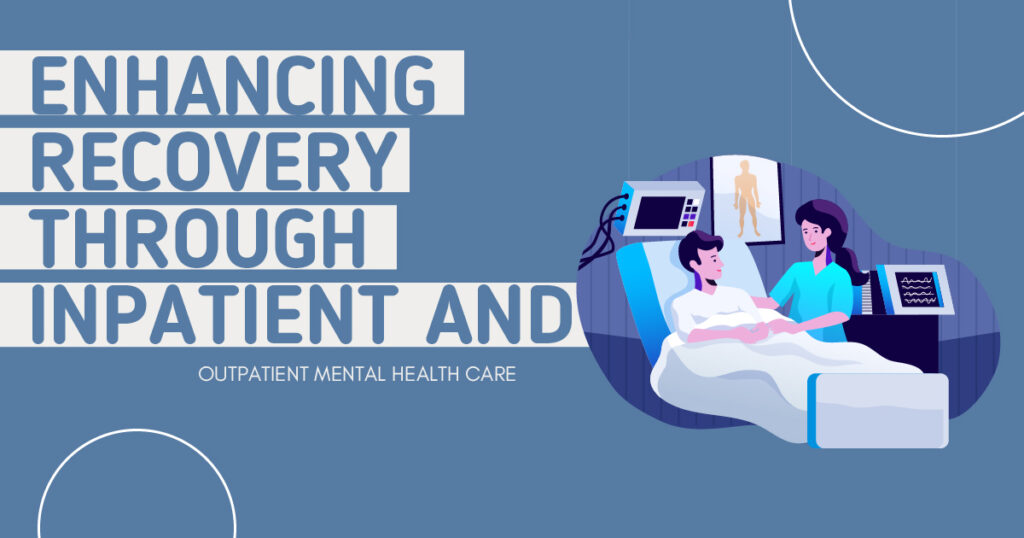
Inpatient care offers 24-hour protective care and treatment in a designated clinical setting. Inpatient facilities and psychiatric hospitals deal with patients in acute mental health crises or with serious symptoms, or people who can harm themselves or others. The level of care guarantees access to medical professionals, medication, and intensive care therapy sessions all day long.
The National Institute of Mental Health (NIMH) states that inpatient psychiatric care can often be suggested when the outpatient interventions have already failed or when a person requires stabilization. Upon hospital admission, they are typically subjected to an extensive examination process, and a tailored treatment plan can be introduced, which can include medication and group counseling as well as crisis intervention strategies.
Key benefits of inpatient care include:
- 24/7 medical supervision and psychiatric support
- Structured environment free from external stressors
- Immediate access to crisis intervention
- Intensive therapy sessions and medication management
The Role of Residential Treatment in Mental Health Recovery
Residential treatment is a transition between inpatient and outpatient therapy, providing a long-term stay in a therapeutic environment that does not require the acute medical attention that a psychiatric hospital provides. The programs usually take between 30 and 90 days, and during the programs, people are given a conducive community setting where they are able to acquire coping skills, tackle underlying problems, and establish a platform towards permanent recovery.

Such care is especially useful to people who move out of inpatient facilities or those who have serious conditions and do not need outpatient services. Residential treatment centers emphasize the use of the holistic approach; they may include evidence-based methods, including cognitive behavioral therapy, dialectical behavior therapy, and trauma-informed care.
Table 1: Comparison of Care Levels
| Feature | Inpatient Care | Residential | Outpatient |
| Duration: | Days to weeks | 30-90 days | Ongoing |
| Supervision: | 24/7 medical | 24/7 staff support | Scheduled sessions |
| Living Situation: | Hospital setting | Therapeutic facility | Home |
| Best For: | Acute crises | Intensive healing | Maintenance care |
Outpatient Therapy and Its Benefits
Outpatient therapy provides patients with the opportunity to continue living their lives, attending work, school, and family obligations even though they get the treatment. This open-ended model of mental health treatment generally presupposes using weekly or biweekly therapy sessions with a licensed mental health care practitioner, as well as required medication administration visits.
The Substance Abuse and Mental Health Services Administration (SAMHSA) also underlines outpatient therapy as a step-down facility and as an important alternative to other, more intensive care means and a primary treatment option. To a large number of people, outpatient services give them the constant rehabilitation needed to sustain recovery as they slowly regain their independence and confidence.
Comparing Therapy Sessions and Behavioral Health Programs
The knowledge of the difference between individual therapy sessions and the comprehensive behavioral health programs can enable patients and families to make informed treatment choices. Individual therapy provides individual, one-on-one care with specific consideration given to particular issues, whereas structured programs have a combination of various therapeutic approaches, group counseling, and skill development.
Behavioral health programs commonly incorporate intensive outpatient programs, which fulfill a number of hours one day, a number of days per week. These programs offer more structure as compared to traditional outpatient therapy and still enable the participants to get home every evening.
Table 2: Therapy Sessions vs. Behavioral Health Programs
| Aspect | Individual Therapy | Behavioral Health Programs |
| Session Format | One-on-one with a therapist | Group and individual combined |
| Time Commitment | 1 hour weekly or biweekly | 3-5 hours daily, 3-5 days/week |
| Peer Support | Limited or none | Built into the program structure |
| Focus Area | Targeted personal issues | Comprehensive skill building |
Integrating Mental Health Services for Holistic Healing
Mental health recovery is usually best accomplished by the incorporation of various levels of care as one advances in treatment. The continuum of care is used to make sure that patients get the intensity of care that they require at every point in their recovery process. Beginning with inpatient services in case of crisis, followed by residential treatment to stabilize the condition, and finally transitioning to outpatient therapy gives a smooth journey to permanent wellness.
Holistic healing is equally focused on the psychiatric symptoms, physical health, communal relationships, way of living, and individual aspirations. Mental health services that are evidence-based acknowledge that recovery is not just based on the management of the symptoms but on the quality of life in general, meaningful relationships, and purpose.
Finding Peace of Mind at Mental Health Center of San Diego
The question of inpatient or outpatient mental health care is a highly personal question, which relies on the needs of patients, the severity of their symptoms, and life conditions. Both routes have useful resources to recover, and numerous individuals have a mixture of services during the healing process. It does not matter what step you take to seek help in the first place.

In case you or an individual close to you is grappling with mental health issues, Mental Health Center of San Diego will be of assistance. Our multidisciplinary mental health team provides a wide range of mental health services, including inpatient referral and residential treatment coordination and individual outpatient treatment.
Get in touch with us to find out more about our programs and find the appropriate level of care that best suits you and your needs.
FAQs
What is the main difference between inpatient vs. outpatient mental health care?
Inpatient treatment involves the patient spending their time at a facility where medical supervision is 24/7, and outpatient therapy is the one where the patients can visit the office at a definite time and go home. Inpatient services are only used in instances of acute crisis, whereas outpatient services are used in instances where the individuals themselves can afford to cope with life as they get treatment.
How long does inpatient mental health treatment usually last?
The period of most inpatient stays is between a few days and several weeks, with an average of five to 10 days for acute stabilization. Complex cases or cases that necessitate transition to residential treatment may require longer stays.
Can I continue working while receiving outpatient mental health treatment?
Yes, outpatient therapy enables the patient to continue working, going to school, and doing family duties during their treatment. The number of intensive outpatient programs available in the evening hours when working professionals have time to visit them is high.
What types of conditions require inpatient psychiatric care?
Inpatient care is typically recommended for severe depression with suicidal ideation, acute psychotic episodes, severe bipolar mania, or any condition where the person poses a risk to themselves or others. It may also be appropriate when previous outpatient treatment has been unsuccessful.
Does insurance cover inpatient and outpatient mental health treatment?
Most health insurance plans cover mental health treatment under the Mental Health Parity and Addiction Equity Act, which mandates mental health benefits be comparable to medical benefits. Coverage specifics vary by plan, so verifying benefits before beginning treatment is important.